Defending Montana’s State Trust Lands: Help Protect Transparency, Public Participation, and the Future of Montana’s State Trust Lands
This effort is led by a coalition of Montana conservation and public access organizations committed to responsible stewardship of and public access to our public lands.
Public Land and Water Access Association — Protecting public access to Montana's public lands and waters since 1985.
Montana Wildlife Federation — Working to protect Montana’s fish and wildlife, public lands, clean waters, and fair chase hunting and fishing heritage.
Montana Sportsmen Alliance — Protecting the rights of resident hunters and anglers.
Ravalli County Fish & Wildlife Association - Ravalli County Fish & Wildlife Association has an abundant, rich history that dates back to the late 1800s protecting the Bitterroot River from sawmill waste. Since the 1940s they've existed as a broader organization committed to working for wildlife conservation, sportsmen's rights and privileges, and public access to Montana's lands and streams.
Skyline Sportsman Association - Established in 1958 in Butte, Skyline Sportsman's Association's mission works to protect wildlife, preserve habitats, and uphold sporting traditions for Montana’s outdoors.

Some background on land exchanges and the Land Board
In May 2026, the Montana Board of Land Commissioners (aka the Land Board) approved a revised and very controversial state lands exchange policy. This substantive policy was developed behind closed doors with a few select lobbyists and released to the public with mere days to review and submit comments. This policy was adopted without providing the level of public notice and participation required by law. PLWA, MWF and MSA are now challenging this in court.
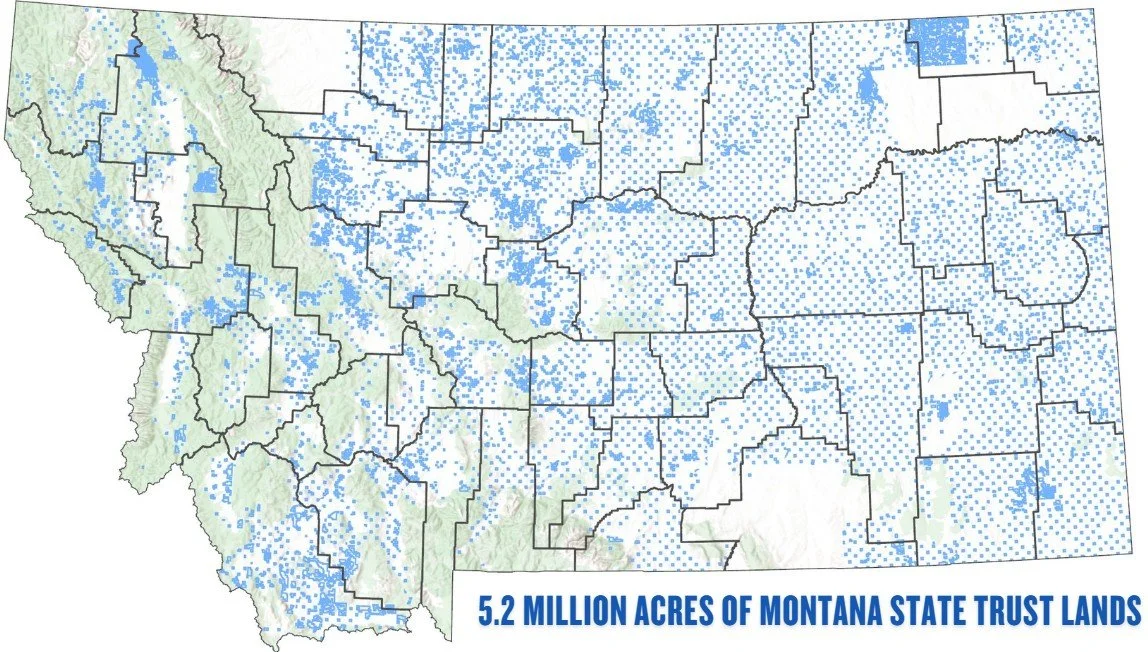
Montana's 5.2 million acres of State Trust Lands belong to all Montanans. They support our public schools, provide wildlife habitat, sustain working landscapes, and offer millions of acres for hunting, fishing and other outdoor recreation. Some state lands are inaccessible and/or offer little value to the state trust. Land exchanges can be valuable tools to trade underperforming lands for other, publicly accessible lands with more revenue potential. However, each land exchange represents a loss and a gain, and to ensure that Montanans are getting fair deals, Montanans should have a reasonable chance to understand, respond and participate meaningfully to proposed changes to the rules that guide these exchanges.
The Coalition’s Legal Complaint
The Montana Land Board recently adopted the first major revision to the state’s land-exchange policy in roughly 20 years. The previous two times Montana substantially revised this policy, the Department of Natural Resources and Conservation led the process and gave Montanans 30 days to review the proposed changes and comment.
This time, neither happened.
Rather, the proposal from State Auditor James Brown, one of the five statewide elected officials who make up the Land Board, was made available to the public less than a week before the vote. DNRC issued no public notice, conducted no public scoping and provided no meaningful opportunity for hunters, anglers, or Montanans to understand what was changing – or what those changes could cost us.
At the meeting, stakeholders requested a 30-day extension. Gov. Greg Gianforte moved to grant the extension, confirming that the request was neither unusual nor unreasonable. His motion failed, and the Land Board adopted the policy anyway, with the governor abstaining.
The Montana Wildlife Federation, Montana Sportsmen Alliance and Public Land Water Access Association later filed suit, arguing that the Land Board adopted a policy without adequate public notice, meaningful public participation or compliance with Montana law. Our lawsuit centers on that failure of process. But the policy changes – who controls the narrative in a land exchange, how independently a proposal is evaluated and who defends the public’s interest – also matter.
Frequently Asked Questions
What the heck are State Trust Lands? The history of Montana’s State Trust Lands go all the way back to Statehood in 1889. Per the Federal Enabling Act, states admitted to the union were granted sections 16 and 36 of every township (part of the public land survey system). These 5.2 million acres of State Trust Lands in Montana are managed by the State to generate revenue to support public schools and other designated state institutions.
What is the Land Board and what do they do? The Montana Land Board is a constitutionally authorized body composed of MT’s top elected statewide officials including the Governor (Greg Gianforte), Secretary of State (Christi Jacobsen), Attorney General (Austin Knudsen), Superintendent of Public Instruction (Susan Hedalen) and State Auditor (James Brown). The Board of Land Commissioners (aka the Land Board) provides strategic direction and oversight for all proposed activities on State Trust Lands.
What’s bad about the new land exchange policy? For over 20 years, the previous land exchange policy provided sideboards and guidance for critical decisions impacting Montanans collective State Trust Lands. Although the policy wasn’t perfect, it placed the MT Department of Natural Resources (DNRC) in the institutional driver's seat; organizing public comment and weighing a proposed land exchange's merits or detriments. DNRC also had the ability to deny land exchanges that didn’t meet the requirements or weren’t in the public’s best interest. The new land exchange policy was developed behind closed doors and explicitly puts paid consultants at the helm while removing DNRC’s ability to deny exchanges.
What’s the basis for your lawsuit? The groups and membership that we represent were given just days of notice to review the Land Board policy. PLWA didn’t even have the time to get comments organized and submitted. After the fact, we learned that the Land Board gave the public a mere 6 days to review and comment on the Land Board proposal. The Montana Administrative Procedures Act (MAPA) requires a much more transparent process.
We Need Your Help!
Legal challenges against state agencies require significant time, expertise, and financial resources. Every donation helps directly support the legal team working to help protect our public lands.
No contribution is too small - Together, we can help ensure that future decisions affecting Montana's state trust lands are made openly, lawfully, and with the public's voice at the table. If you are able, please consider helping us reach our goal of $10,000.
News & Notes
“Montanans should demand that elected officials follow the public process and reject one-sided rules governing state land transactions”
Stay up to date on the latest Land Board news and developments in Montana.